Showing 14 Result(s)
General Dentistry

Understanding Dental Crowns and Bridges

Good oral hygiene and regular dental visits are essential in preventing damage to our teeth. However, in the case of tooth damage or loss, contemporary dentistry has offered a variety of solutions to restore the dead or missing teeth, significantly enhancing the quality of life for many people. Dental crowns and bridges are among the most practised restorative procedures. These adjuncts not only improve your appearance but also carry out the significant functions of improving your chewing ability and speech articulation.

Understanding Dental Crowns

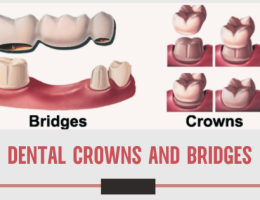
Dental crowns are tooth-shaped dental restorations, also known as caps and they are placed on weak or damaged teeth. They are custom-fitted to match your tooth’s shape, size, and color, restoring functionality and visual appeal.

When Would You Need a Dental Crown?

There are several reasons why your dentist might recommend a dental crown:

Tooth Damage: When a considerable proportion of the tooth structure is destroyed by decay or fracture, a crown provides strength and protection.

Post Root Canal Treatment: After undergoing a root canal procedure or endodontic therapy, the tooth loses vitality and is prone to fractures. A crown gives extra strength and decreases the possibility of future fractures.

Cosmetic Enhancement: A crown can be used to cover discolored or misshapen teeth, significantly improving a person’s smile and self-confidence.

Dental Implants: Dental crowns are used to finalize dental implant procedures, providing a durable and functional tooth-like structure.

The procedure of crown placement is often completed over two dental visits. During the first, your tooth is prepared, and impressions are taken to allow for customization. During the second visit, the permanent crown is fitted.

Understanding Dental Bridges

On the other hand, dental bridges are used to replace missing teeth. It’s a type of fixed oral prosthesis that bridges the gap left by one or more missing teeth. They are constituted by a series of connected crowns that utilize the support of the adjacent teeth (also known as abutment teeth) on either side of the gap.

When Would You Need a Dental Bridge?

Dental bridges are employed in the following scenarios:

Replacing a Tooth or Several Teeth: If one or several consecutive teeth are lost or need to extraction due to extensive decay or trauma, dental bridges come into use.

Preventing Misalignment: Missing teeth can cause the remaining to shift, leading to misalignment. Bridges help in maintaining the teeth alignment.

Restoring Functionality: Lost teeth can disrupt your ability to speak, chew, or bite effectively. Dental bridges restore these essential functions.

Restoring Aesthetics: An obvious gap from missing teeth affects the aesthetics of one’s smile. Dental bridges recreate a full smile, much improving one’s self-esteem.

Similar to crowns, placement of a dental bridge requires two dental visits. The first visit includes tooth preparation and impression making. The second visit concerns the fitting and adjusting of the permanent bridge.

Conclusion

The advent of dental crowns and bridges has revolutionized restorative dentistry. While both serve to restore the aesthetics and functionality of a smile, it’s crucial that they are cared for appropriately. Practise good oral hygiene — flossing, brushing twice daily, and regular dental appointments. Remember, the lifespan of your restoration not only depends on the quality of the procedure but also on your maintenance. In the competent hands of a skilled dental professional and your proper aftercare, your dental crowns and bridges can sever you for a long time, offering you a confident and evergreen smile!
General Dentistry

What is Dental Cleaning?

A dental cleaning, medically referred to as prophylaxis, is a preventive procedure aimed at improving oral health by removing plaque and tartar from the surfaces of the teeth. The cleaning process is crucial in preventive oral health care as it decreases the likelihood of dental diseases such as tooth decay and gum diseases.

Understanding Dental Cleaning

Dental cleaning is more than just ordinary brushing and flossing at home. It involves a comprehensive cleaning process done by dental hygienists to help maintain good oral health. Despite regular home care, certain areas in the mouth may be hard-reach, causing plaque and tartar build-up. Plaque is a bacterial film that forms on the surfaces of teeth, while tartar, also known as calculus, results from the hardened plaque. Dental cleaning aims to address these issues that ordinary brushing or flossing cannot handle effectively.

Why is Dental Cleaning Important?

The importance of dental cleaning cannot be overstated. Regular professional cleanings can help in the early detection of oral issues such as tooth decay and gum disease. In addition, it aids in the prevention of bad breath, often caused by the accumulated bacteria on the tongue or between teeth.

Moreover, oral health is a reflection of overall health. Research suggests a strong link between oral health and systemic conditions like heart disease, diabetes, and osteoporosis. Dental cleanings, hence, take on a broader role contributing to overall wellness apart from just maintaining oral health.

The Dental Cleaning Process

Initial Examination

A dental hygienist, using a small mirror, will check around your teeth and gums for any signs of gingivitis or other potential concerns. If major dental issues are detected, they may recommend visiting a dentist before proceeding with the cleaning.

Removing Plaque and Tartar

The dental hygienist uses a device called a scaler to get rid of plaque and tartar around the gumline and between your teeth. The more tartar there is in your mouth, the more time they’ll need to scrape a particular spot.

Brushing and Flossing

After your teeth are completely tartar-free, the hygienist brushes them using a high-powered electric brush. They will floss your teeth and follow it with a rinse to get rid of any debris.

Fluoride Treatment

Lastly, a fluoride treatment is applied which serves as a protectant for your teeth to help fight against cavities until your next visit.

Common FAQs About Dental Cleaning

How often should I get a dental cleaning?

The American Dental Association recommends regular dental visits at intervals determined by your dentist for professional cleanings and oral exams. Generally, one dental cleaning every six months is considered standard. However, depending on specific oral health needs, the dentist might recommend more frequent visits.

Is dental cleaning painful?

Dental cleanings should not be painful. However, if you haven’t had your teeth cleaned in a long time, you might experience some discomfort or sensitivity.

Can dental cleaning whiten my teeth?

While a professional cleaning can remove surface stains making your teeth appear whiter, it is not a whitening treatment. Teeth whitening involves the use of bleaching agents to lighten the color of your teeth.

In Conclusion

Dental cleaning is an essential preventive measure that plays a crucial role in maintaining healthy teeth and gums, and by extension, contributes to overall health. It is more comprehensive than routine brushing and flossing, tackling hard-to-reach areas to remove build-up of plaque and tartar. Coupled with good oral home care, regular professional dental cleanings can help prevent tooth decay, gum disease, and other oral health issues, while also serving as an opportunity for early problem detection.

General Dentistry

Digital Radiography in Dentistry: A Shift Towards A More Efficient Oral Health Care

The domain of dentistry has always been at the forefront of utilizing advances in digital technology, aiming towards providing more efficient, safer, and faster treatments. A prime piece of evidence supporting this claim is the adoption of Digital Radiography in dental procedures.

Digital Radiography: An Overview

Digital Radiography is a type of X-ray imaging that uses digital X-ray sensors instead of traditional photographic film. In this technology, the X-ray machine produces X-ray photons, which interact with digital detectors, converting the photons into electrical signals. This signal is then digitized to produce a digital image, allowing instant visualization, manipulation, and storage of the captured images.

Digital Radiography in Dentistry: Working Principle

In the sphere of dentistry, digital radiography functions on the same technology, either through Direct Digital Radiography (DDR) systems or Computed Radiography (CR) systems. In DDR systems, X-ray photons are directly converted into an electrical signal. In contrast, CR systems use a phosphor plate to capture X-ray images; the trapped electrons in the plate are released as visible light and then converted into an electrical signal which is digitized.

With the help of digital radiography, dentists can get immediate access to high-resolution images of patients’ teeth and oral structures, which prove critical for diagnosis and treatment planning.

Advantages of Digital Radiography in Dentistry

Digital radiography offers numerous advantages over traditional film-based dental X-rays, ranging from improved diagnostic capability to better patient comfort:

Superior Image Quality

With digital radiography, high-resolution images can be obtained, providing exceptional detail that can assist in diagnosing dental conditions, such as cavities, periodontal disease, oral infections, and oral cancer. Advanced tools allow dentists to zoom in, adjust brightness and contrast, highlight, and manipulate the images for better discernment of the oral structures and anomalies.

Reduced Radiation Exposure

Digital radiography requires significantly less radiation compared to traditional film X-rays. This not only ensures patient safety but also reduces the potential risk linked to radiation exposure in the long run.

Real-Time Imaging

Digital radiographs offer the advantage of real-time imaging, thereby providing quicker results and expediting clinical workflow. This can be beneficial in emergency cases and helps in enhancing overall efficiency and patient experience.

Easy Storage and Retrieval

Being digital, the ease of storage and retrieval of patient’s dental films is a significant advantage. It makes it possible to maintain a seamless electronic record, aiding in longitudinal tracking of patients’ oral health.

Enhanced Patient Education

Having crisp instant images allow for better patient communication and education, so they understand their dental condition and the treatment plan more effectively.

The Future of Digital Radiography in Dentistry

The incorporation of digital radiography in dentistry has significant implications for the future, promising a myriad of technological advancements in oral healthcare.

Artificial Intelligence (AI): With the incorporation of AI, these digital images can be used to detect abnormalities automatically, fostering speed, precision, and accuracy in diagnose.

Tele-dentistry: Digital radiography will play a pivotal role in tele-dentistry, making it possible for images to be sent and reviewed remotely, which will immensely benefit patients in remote areas and during pandemic scenarios.

3D Imaging: With advancements in technology, 3D imaging in dentistry can aid in a more comprehensive view of oral structures, which proves crucial in complex dental procedures like root canals and implants.

In Conclusion

Digital radiography has revolutionized the dental field, bringing about immense improvements in diagnosis, patient experience, and treatment outcomes. With continual advancements in technology, it promises to continue evolving, setting new standards in dental healthcare.

General Dentistry

Preventive Dentistry: A Holistic Approach to Oral Health

Preventive dentistry pertains to the practice of maintaining good oral health to prevent dental issues like cavities, gum disease, enamel wear, and more. The cornerstone of preventive dental care includes regular dental appointments, brushing, flossing, and a well-balanced diet.

The Importance of Preventive Dentistry

The importance of preventive dentistry cannot be overemphasized. It’s the frontline defense in the maintenance of a healthy smile and the overall health and wellbeing of an individual. Illnesses like heart disease, osteoporosis, and some forms of cancer have been directly linked to poor oral health. Thus, preventive dentistry not only protects the mouth but also shields the body against significant health conditions.

Methods of Preventive Dentistry

Several techniques are used in preventive dentistry. They range from the simplest forms of oral care at home to intricate procedures carried out in a dental clinic.

At-home Care

At the basic level, preventive dentistry starts at home with proper oral hygiene routine. This includes:

  • Brushing your teeth twice every day, preferably once in the morning and once at night, using fluoride toothpaste.
  • Flossing at least once every day.
  • Proper nutrition and limiting foods with high sugar content.

Professional Dental Care

In tandem with at-home oral care, regular professional cleanings and check-ups are essential. Dental office visits should occur at least semi-annually, depending on the dentist’s advice. Dental cleanings will remove plaque and tartar deposits that daily brushing can’t, and regular check-ups can diagnose any potential problems in their initial stages, aiding in early treatments.

Some preventive measures used in professional dental care include:

Dental X-rays: These help detect oral issues that aren’t visible during regular check-ups, like damage to jawbones, impacted teeth, abscesses, or tumors.

Fluoride Treatments: This is a key preventive measure for patients with a high risk of cavities. The dentist applies fluoride directly on the teeth.

Sealants: These are thin protective coatings applied to the back teeth’s chewing surfaces (premolars and molars) to prevent decay.

Advantages of Preventive Dentistry

Lower Dental Costs

Preventive dentistry can save you money in the long run by spotting and dealing with dental complications early on. These problems, if left unattended, might require expensive treatments down the line.

Healthier Lifestyle

Preventive practices promote a healthier lifestyle. For instance, reducing sugary food intake not only improves oral health but also overall health.

Improved Self-esteem

Good oral health also leads to a pleasant breath and a beautiful smile, which can significantly boost self-esteem.

Preventive Dentistry for All Age Groups

Preventive dentistry is pertinent to people of all ages. As soon as a child gets their first tooth, oral care should begin. A dental visit by the first birthday is recommended by the American Dental Association. As for the elderly, preventive measures are vital to protect oral health against natural aging processes.

In Conclusion

To sum up, preventive dentistry offers a holistic approach to maintain oral hygiene and overall health. Embracing a preventive mindset, incorporating healthy habits, and aligning with regular professional dental care not only ensures a beautiful smile but protects you against major health issues. Envision a world where everyone cherishes their smile, values their oral health, and recognizes the vital role of preventive dentistry. After all, the journey to good oral health begins with prevention.